
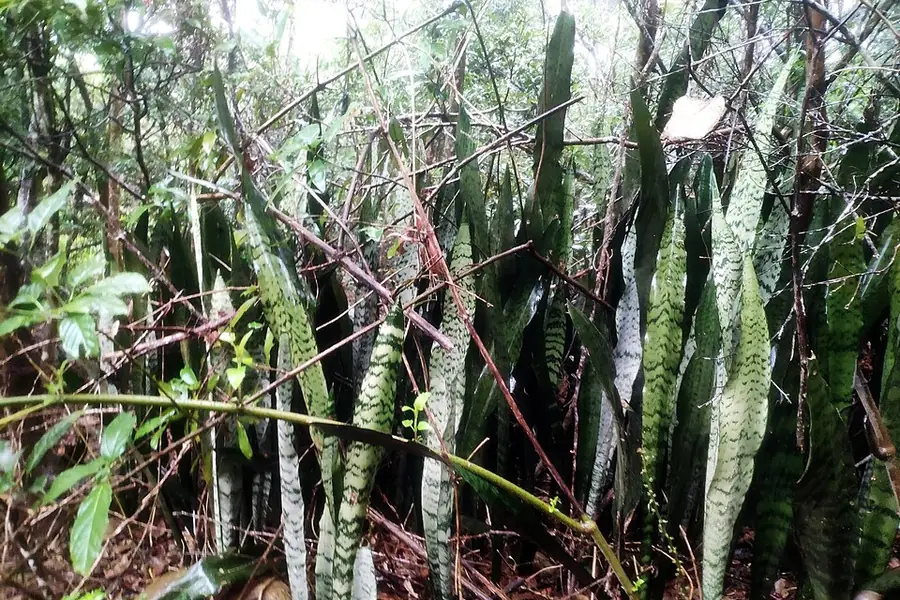
- Family
- Asparagaceae
- Native to
- Tropical West Africa, from Nigeria to the Congo
- Mature size
- 2-4 ft tall, spreading slowly by rhizome
- Toxicity
- Contains saponins that cause vomiting, drooling and diarrhoea in cats and dogs if chewed. Rarely serious but unpleasant.
Snake Plant care at a glance
Light
Low to bright indirect
Survives in genuinely dim corners and thrives in bright indirect light. Direct sun is tolerated if introduced gradually, but sudden full sun bleaches the leaves.
How to measure light at homeWater
Let the mix dry between waterings
Check that the potting mix has dried well before watering again, then soak it and let excess water drain. Expect a longer interval in winter.
How to water houseplants properlyHumidity
Any
Indifferent to humidity. Dry heated rooms in winter cause it no trouble at all.
Temperature
60-85°F (15-29°C)
Keep above 50°F (10°C). Cold plus wet soil is the combination that kills snake plants.
Soil
Cactus and succulent mix
Use a gritty cactus mix, or standard potting soil cut 50/50 with perlite or coarse sand. Never plant in dense, water-retentive soil.
Fertiliser
Light feeding during active growth
Use a balanced houseplant fertilizer according to its label while the plant is growing; plants in low light need less frequent feeding.
Repotting
When crowded or unstable
Repot when roots or rhizomes crowd the container, drainage worsens or the plant becomes top-heavy. Choose a pot with drainage holes.
How to repot a houseplantPropagation
Division or leaf cuttings
Division preserves the parent plant’s markings. Leaf cuttings also work, but variegated cultivars may produce plain-green growth.
Snake plants tolerate lower light, dry indoor air and missed waterings better than many common houseplants. Their main avoidable risk is persistently wet, poorly drained potting mix.
The most important rule: let the mix dry between waterings
Snake plants are succulents. Their thick, waxy leaves and fleshy rhizomes store water, and their roots are adapted to seasonally dry African soil. They are not adapted to sitting in moisture.
Wait until the potting mix has dried well before watering again. Then water thoroughly until excess drains from the bottom, and empty the saucer.
The wait is often longer in winter or low light. If you cannot tell whether the lower mix is dry, use a wooden skewer or compare the pot’s weight before and after watering; if damp mix clings to the skewer, wait.
Why terracotta matters here
Unglazed terracotta is porous and lets the potting mix lose moisture through the pot walls. It can be helpful in slow-drying rooms, but drainage holes and checking the mix still matter.
A snake plant in a glazed ceramic pot with no drainage hole, in dense potting soil, is on borrowed time no matter how careful you are.
Light
Snake plants are the standard recommendation for low light, and the recommendation is broadly right, but “tolerates” is not “prefers”.
| Light level | What happens |
|---|---|
| Bright indirect | Fastest growth, strongest variegation, may flower |
| Medium indirect | Steady, slow growth, the typical indoor result |
| Low | Survives for a long time, grows almost nothing |
| Direct sun | Fine if introduced gradually; sudden exposure bleaches leaves |
| No natural light | Slow decline over months |
If you want your snake plant to actually grow rather than just persist, give it bright indirect light. For other plants that cope with dim rooms, see the best low-light houseplants.
Spotting and treating root rot
This is the failure mode, so know the signs:
- Leaves that were rigid become soft and floppy near the soil line
- The base of a leaf turns yellow-brown and squashy
- A sour, boggy smell from the soil
- Leaves pull away from the base with almost no resistance
Act immediately:
- Tip the plant out and shake off all the old soil.
- Cut away every root and rhizome section that is brown, soft or stringy. Healthy roots are firm and pale orange.
- Leave the cut sections exposed to air for 24 hours to callus.
- Repot into dry cactus mix in a clean terracotta pot.
- Do not water for at least a week.
If the rot has reached most of the rhizome, salvage the healthiest leaves as cuttings and start over.
Propagation
Division (recommended). Tip the plant out, find where rhizomes join clumps of leaves, and separate them by hand or with a clean knife. Pot each division into dry cactus mix. This is fast, reliable, and preserves variegation.
Leaf cuttings. Cut a healthy leaf into short sections, keeping track of which end pointed down, because they root from the original bottom edge. Let the cuts dry briefly, then stand them upright in a lightly moist, well-drained mix. Rooting and new shoots can take time.
The important caveat: leaf cuttings of variegated cultivars lose their variegation. The yellow margin of a Laurentii is a chimera in the outer cell layer, and new plants grow from the inner green tissue. If you want yellow edges, divide.
Feeding
Feed lightly while the plant is actively growing, following the fertilizer label and reducing the dose for plants in low light. More fertilizer is not a substitute for suitable light and drainage.
Sources and further reading
- Dracaena trifasciata (Snake Plant) — NC State Extension
- Snake Plant: A Forgiving, Low-maintenance Houseplant — Penn State Extension
Snake Plant problems and fixes
| Symptom | Likely cause | What to do |
|---|---|---|
| Leaves soft, mushy and yellow at the base | Root rot from overwatering | Unpot immediately, cut away every soft root and rhizome, let the cuts callus for a day, then repot into dry cactus mix. Do not water for a week. Full guide → |
| Leaves falling over and splaying outward | Too little light, or a pot too large and wet | Move to brighter light and check the soil is drying fully. Very tall leaves may simply need staking or dividing. |
| Brown crispy tips | Inconsistent watering or fluoride in tap water | Water thoroughly but far less often, and switch to filtered or left-out tap water. Trim the brown tip at an angle if it bothers you. Full guide → |
| Wrinkled, curling leaves | Severe underwatering, rare but it happens | Give it a thorough soak and let it drain. Leaves plump back up over a week or two. |
Snake Plant FAQs
How often should I water a snake plant?
Water only after the potting mix has dried well, then soak it thoroughly and let it drain. The interval changes with light, temperature, pot size and season and is usually longer in winter, so check the mix instead of following a fixed calendar.
Can a snake plant live in a room with no windows?
It can survive for months in very low light but it will not grow, and in a windowless room with only occasional artificial light it will gradually decline. A snake plant is a good choice for a dim corner of a lit room, not for a genuinely dark one. If a room has no natural light at all, a grow light on a timer solves the problem.
Why is my snake plant falling over?
Usually one of two things. Either the plant is reaching for light and the leaves have grown weak and elongated, or the base has begun to rot from overwatering and can no longer support the leaves. Check the base first. If it is soft or smells sour, treat it as root rot immediately.
Do snake plants really clean the air?
They do remove some volatile compounds in sealed laboratory chambers, which is where the famous NASA study was run. In a real room with normal air exchange, the effect is far too small to measure. Grow them because they are handsome and nearly indestructible, not as an air purifier.
How do I propagate a snake plant and keep the yellow edges?
Divide it rather than taking leaf cuttings. Variegated types such as Laurentii propagate true only by division, because leaf cuttings grow from the plain green tissue and lose the yellow margins. Tip the plant out, separate the rhizome clumps by hand or with a clean knife, and pot each section separately.
Related care guides
Published by Plantive · Published June 9, 2026 · Updated September 20, 2026