
Why Are My Monstera Leaves Not Splitting?
Published by Plantive · Updated September 13, 2026
Short answer
Monstera leaves may stay solid because the plant is young or receives too little light. Check maturity and light first, then provide climbing support. Existing solid leaves will not develop natural splits later; look for changes in new growth.
Check these possible causes
- 1
A young plant or juvenile new growth
commonHow to tell: The plant has only produced small, solid leaves, or the solid leaves are on a new shoot after pruning.
What to do: Keep a photo of the newest fully opened leaf as a baseline. Solid juvenile leaves alone do not mean the plant is unhealthy.
- 2
Too little light
commonHow to tell: Recent leaves have fewer splits than older leaves, especially after a move to a dimmer position.
What to do: Compare the light at leaf level in the current spot and near a bright window. Introduce brighter indirect light gradually and watch for scorching.
- 3
No support for climbing growth
commonHow to tell: A long main stem sprawls out of the pot and aerial roots have no support to attach to.
What to do: Support the main stem with a stable pole or plank and loose ties. Support helps climbing growth but cannot guarantee a particular leaf shape.
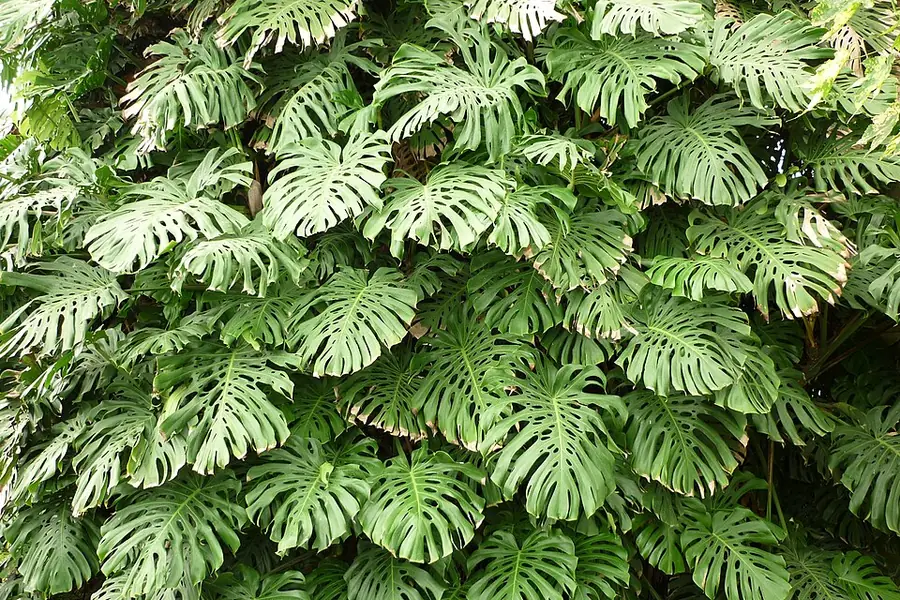
Photo Jungle Rebel from Brussels, Belgium · CC BY 2.0 via Wikimedia Commons
A Monstera with no fenestrations is not automatically a sick plant. Start with its growth history: has it never made a split leaf, or has a previously split plant begun producing solid leaves? That distinction makes the checklist above more useful.
Do Monstera leaves split as they grow?
There are two different kinds of growth here. The plant can produce increasingly divided leaves as it matures. A fully opened leaf does not acquire a new pattern of natural holes later. Tears from handling or damage are different from fenestrations.
Keep healthy solid leaves. They still contribute to the plant, and removing them does not make the next leaf split. The University of Wisconsin Extension Monstera profile describes the difference between juvenile, solid foliage and the divided leaves of mature growth.
Why does my Monstera not have fenestrations?
Use this comparison before buying supplies or changing several things at once.
| What you observe | What to check next |
|---|---|
| Only small, solid leaves so far | Juvenile growth; take a baseline photo and check the growing conditions |
| Older split leaves, newer solid leaves | A change in light, a new shoot, or other signs of stress |
| Long stem growing sideways | Whether the main stem has stable support |
| Solid leaves plus yellowing or wilting | Moisture and roots; leaf shape is not the only issue |
For a plant whose leaves are also yellowing, use the overwatering versus underwatering checklist before adding water or fertilizer.
How to encourage new leaves to split
Check light at the leaves
Bright indirect light is a useful starting point. The brightness of the room or a fixed distance from a window is not enough to describe the plant’s actual conditions: window size, outdoor obstructions and season all matter. Use the houseplant light guide to compare locations in your home.
The RHS Monstera guide notes that very low light can mean fewer holes. Avoid a sudden move into intense direct sun.
Give a climbing plant support
A stable support can help a sprawling stem grow upward. Secure the main stem loosely, leaving leaf stalks free to move. The RHS growing guide describes how climbing plants often develop larger, more divided leaves, and how new growth after pruning can return to a juvenile form. A moss pole is an option, not a promise of a particular result.
Check the identity and the care routine
Make sure you are comparing the same plant. A heartleaf philodendron is not a young Monstera, even though both can have heart-shaped leaves. Use a clear leaf and whole-plant photo if the label is uncertain.
Use the Monstera deliciosa care guide for the routine. Do not repot a healthy plant or increase fertilizer solely because one leaf lacks holes.
What to record over the next few leaves
Take a photo when each new leaf has fully opened. Record the date, approximate leaf width, number of edge splits and number of interior holes. Note any move, pruning or repotting beside the photo.
This is a comparison method, not a timetable: a slow-growing plant may need much longer than a few weeks to provide new evidence. If growth stops and other symptoms appear, investigate those symptoms instead of waiting for fenestration alone.
Frequently asked questions
Do Monstera leaves split as they grow?
Later leaves can develop more splits as the plant matures. An individual leaf that has fully opened solid will stay solid; it will not form natural fenestrations afterwards.
At what age do Monstera leaves start splitting?
There is no fixed birthday or leaf size. Young plants often have solid foliage for several years. Growing conditions and whether the plant came from juvenile or mature material affect what you see.
How do I make my Monstera leaves split?
Check light and maturity, provide support, and keep the roots healthy. These support future growth. Cutting holes in leaves or adding extra fertilizer does not create natural fenestration.
Why does my Monstera have splits but no holes?
A leaf can have edge splits without interior holes. Compare later leaves over time rather than expecting every leaf to match a mature specimen.
Other problems to rule out
Long bare stems, widely spaced leaves
Legginess is almost always insufficient light. Move the plant closer to a window or add a grow light, then prune the stretched growth, because it never re-compacts on its own.
mediumWilting, yellowing, but which cause?
Feel the soil two inches down and squeeze a leaf. Damp soil with soft limp leaves means overwatering. Dry soil with crisp papery leaves means underwatering.
highRoot rot
If a plant wilts while the potting mix remains wet, inspect the roots. Healthy roots are firm; rotted roots are soft and discolored. Remove affected tissue, use a clean container and well-drained mix, then avoid keeping the root zone saturated.
Published August 2, 2026 · Updated September 13, 2026