
How to Get Rid of Fungus Gnats in Houseplants
Published by Plantive · Updated September 13, 2026
Short answer
Confirm the flies are fungus gnats, then address the damp potting mix where larvae develop. Use yellow sticky traps to monitor adults. If needed, choose a larval treatment labeled for fungus gnats on indoor potted plants, such as an appropriate Bti product.
Check these possible causes
- 1
Potting mix staying damp
commonHow to tell: Flies appear when you disturb a pot and its surface stays moist between waterings.
What to do: Check drainage, empty standing water and adjust watering to the species. Let the surface dry where the plant tolerates it.
- 2
An overlooked breeding source
commonHow to tell: Adult catches keep rising despite treating one pot.
What to do: Check nearby plants, newly purchased pots, damp stored potting mix and fallen plant debris. Label traps so you can compare pots.
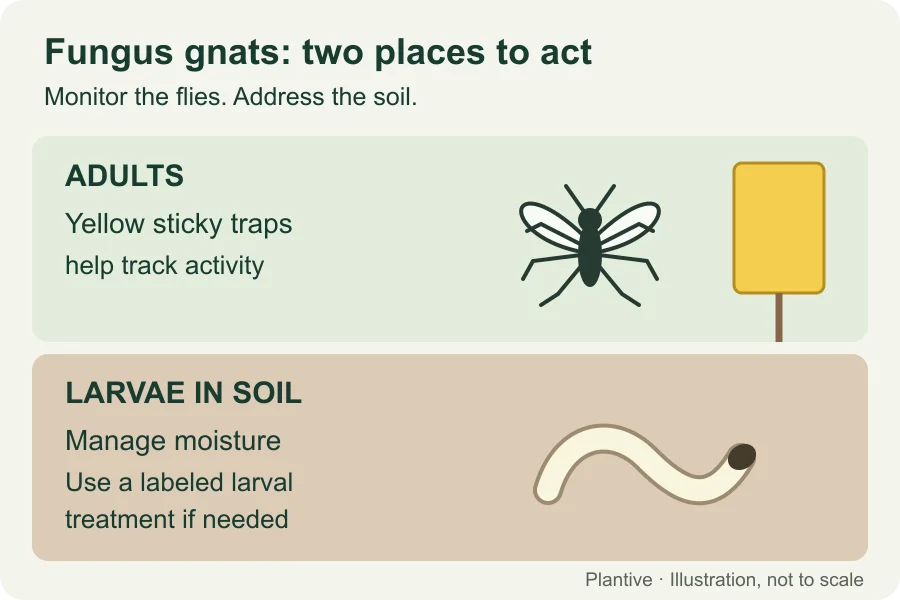
Tiny black flies around a houseplant often point to fungus gnats, but identify the source before treating every pot. A fly around a fruit bowl or drain may need a different solution.
What do fungus gnats and their larvae look like?
Adults are small, dark, delicate flies with long legs and antennae. They often rest or move near potting mix. Larvae are pale or translucent, wormlike, and have a dark head. The UC Integrated Pest Management guide includes reference photographs for comparing an actual insect.
Use a close, focused photo of a trapped adult if you need help identifying it. The illustration above explains where to act; it is not a substitute for a specimen photograph.
A checklist for getting rid of fungus gnats
1. Find the active pots
Put a dated yellow sticky card close to each suspect pot, following the trap instructions. Give each pot a name or number. Comparing catches is more useful than counting every fly in the room.
Check new plants and nearby pots too. Remove fallen leaves and other decaying material from the surface. Keep unused potting mix covered and dry.
2. Correct persistent moisture
Check for water trapped in a decorative outer pot and blocked drainage holes. Adjust watering to the species and the actual moisture in the pot. Surface drying can reduce favorable breeding conditions, but do not force a moisture-loving plant into a severe wilt.
If you are unsure whether the plant is too wet or too dry, use the overwatering versus underwatering guide. A gnat sighting alone does not diagnose root rot.
3. Treat larvae when needed
An appropriate product containing Bacillus thuringiensis subsp. israelensis (Bti) is one option for larvae. Products and formulations differ: check that the label covers fungus gnats and indoor potted plants, and follow its dose and repeat-treatment directions. Do not substitute a generic mosquito-product recipe.
Beneficial nematodes may be another option where suitable products are available. Colorado State University Extension explains larval controls and why trapping adults alone leaves the soil stage untreated.
4. Track the trend
Use the same trap placement and observation interval so the counts are comparable. Record this for each affected pot:
| Record | Your note |
|---|---|
| Pot and date | For example, living-room pothos, September 13 |
| Trap observation | New adults since the previous check |
| Moisture before watering | Surface and deeper mix checked separately |
| Action taken | Drainage change or product used according to its label |
| Plant condition | New growth, wilting or yellowing |
This log is a practical way to see whether a single pot remains active. Falling catches are encouraging; a large increase means it is time to recheck the source and identification.
Why do fungus gnats keep coming back?
Eggs, larvae, pupae and adults can overlap in the same collection. Colorado State describes a life cycle of roughly three to four weeks under typical warm indoor conditions. A one-day treatment cannot be judged by whether all flying adults disappear that evening.
If activity continues, check the record: was the larval treatment appropriate, was it repeated as directed, and were nearby breeding sources missed? If you cannot confirm the insect or control it, take a specimen or clear photographs to a local extension service.
What not to change blindly
Avoid replacing all your plants’ soil just because you see one fly. Likewise, bottom-watering does not prove that the rest of the pot is dry. Check the actual conditions before making another change.
Once the infestation is under control, use the species-specific plant care guides to set a watering routine that suits the plant and your home.
Frequently asked questions
Are fungus gnats harmful to houseplants?
Adults are mainly a nuisance. Larvae live in the growing medium and can damage roots, with seedlings and young cuttings especially vulnerable.
How long does it take to get rid of fungus gnats?
Allow several weeks for monitoring and control. Different life stages can already be present, so a few trap catches after treatment do not by themselves show that it failed.
Do yellow sticky traps get rid of fungus gnats?
They catch adults and help locate active pots. They do not treat larvae in the potting mix, so use them alongside management of the breeding source.
Should I use hydrogen peroxide or cinnamon for fungus gnats?
This guide does not recommend a homemade drench or cinnamon recipe. Start with moisture management and monitoring; if a treatment is needed, use a product labeled for the pest and indoor use.
Other problems to rule out
Wilting, yellowing, but which cause?
Feel the soil two inches down and squeeze a leaf. Damp soil with soft limp leaves means overwatering. Dry soil with crisp papery leaves means underwatering.
highRoot rot
If a plant wilts while the potting mix remains wet, inspect the roots. Healthy roots are firm; rotted roots are soft and discolored. Remove affected tissue, use a clean container and well-drained mix, then avoid keeping the root zone saturated.
lowWhite fuzz or crust on the potting mix
Soft white fuzz on damp potting mix is usually a fungus feeding on organic matter, and it is not necessarily harmful to the plant. Scrape it off, let the surface dry as far as the plant tolerates and improve airflow. A hard, crunchy crust is more likely salt buildup, which needs flushing instead.
Published July 21, 2026 · Updated September 13, 2026